Spinel buying guide: red, pink, cobalt blue and Mahenge stones
From the Black Prince's Ruby to Mahenge pink and cobalt blue: how to judge spinel, where it comes from, how labs detect heating and why demand has grown.
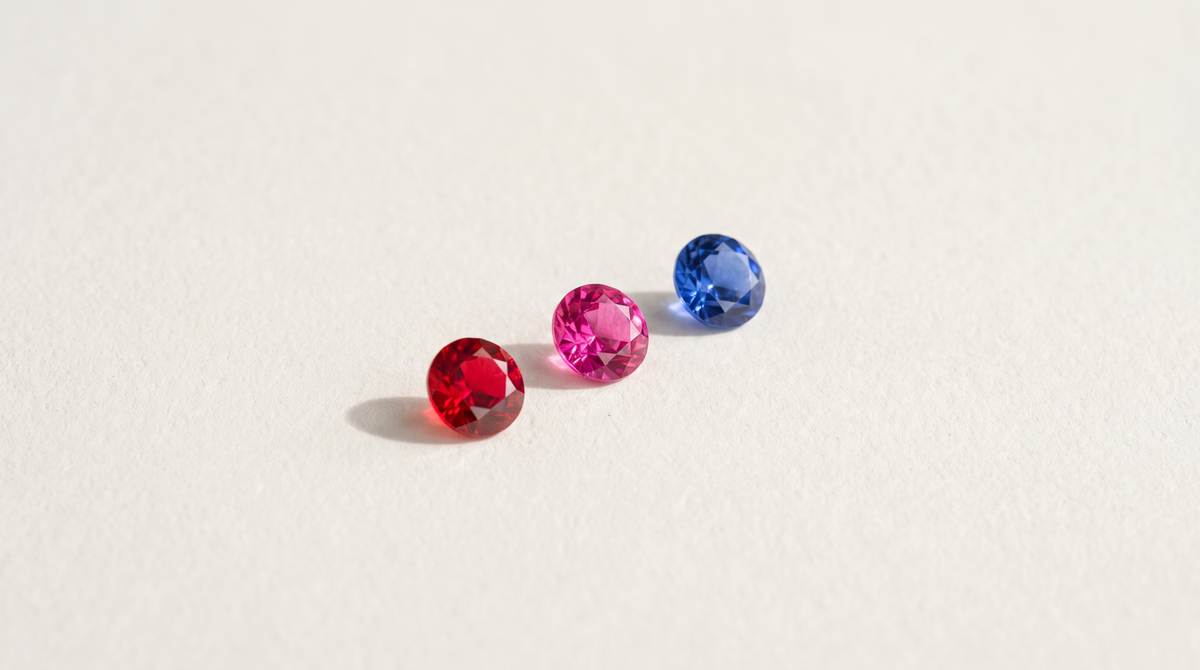
For centuries, spinel sat in royal crowns under the name of ruby. Today the spinel gemstone is valued on its own terms: hard, brilliant, usually unheated and, in its best colours, genuinely scarce. This guide covers the colours that matter, the main sources, how laboratories approach heat treatment and why trade demand has grown.
The rubies that were not rubies
Spinel is a magnesium aluminium oxide that crystallises in the cubic system. Red spinel owes its colour to chromium, the same element that colours ruby. Before modern testing there was no reliable way to tell them apart, which is why so many historic "rubies" turned out to be spinel. According to Gübelin, it was not until 1783 that the French mineralogist Jean-Baptiste Louis Romé de l'Isle recognised spinels as minerals in their own right.
The best-known example is the Black Prince's Ruby, a crimson spinel set in the Imperial State Crown and displayed at the Tower of London. GIA traces it to fourteenth-century Spanish records and notes that Edward, Prince of Wales, received it in 1367. The Timur Ruby, also in the Crown Jewels, weighs more than 350 carats and bears several Persian inscriptions. Large spinels like these were known as balas rubies and came from ancient mines in Central and South-East Asia; GIA suggests the Black Prince's stone was probably mined in the mountains of Afghanistan, while a 2022 Gems & Gemology study notes it is said to come from Kuh-i-Lal in present-day Tajikistan.
The confusion has not entirely gone away. In its Summer 2026 issue, Gems & Gemology described a 3.37-carat purplish red stone submitted to GIA as a ruby. It proved to be natural spinel that had been heated and contained glass filler.
Colours that matter
Red
GIA lists bright red among the most valued spinel colours. Myanmar is the classic source, and dealers interviewed for JNA's GEMSWORLD 2025 named it the leading source of "Jedi" spinel, a trade term for neon red to pink stones. Many red spinels lean orange, pink or purple, so a clean red is worth checking in more than one light.
Pink and Mahenge spinel
Mahenge, in Tanzania, became widely known in August 2007, when miners at Ipanko found four very large crystals, as JCK has reported. The district had been known for ruby and spinel since the mid-1970s. Its most saturated material is a neon hot pink, which JCK attributes to high chromium with a little iron; it also produces pastel pinks, purplish stones and reddish orange. According to JCK, GemGuide places fine pink spinel of 5 to 9.99 carats at about US$4,500 per carat, though such stones often sell for more. Tajikistan's Kuh-i-Lal deposit, by contrast, yields mainly pink and purple spinel.
Cobalt blue
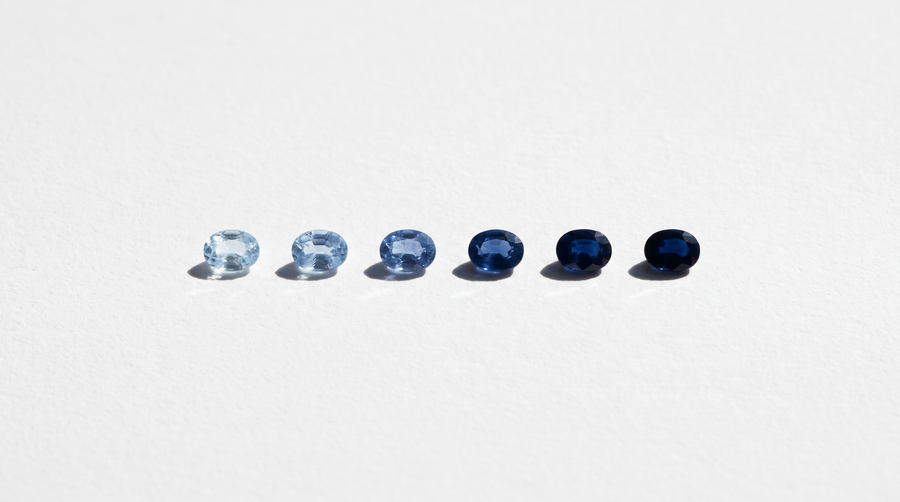
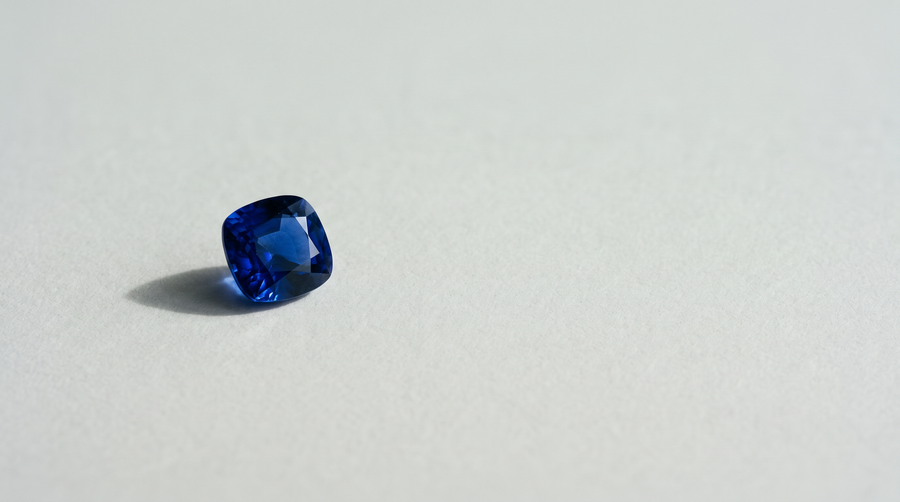
True cobalt blue is among the rarest spinel colours. Research published in Gems & Gemology in 2015 identified cobalt as the main colouring agent in the most saturated blue stones, with iron adding a greyer cast as its share rises. The same study called Luc Yen in northern Vietnam the leading source of vivid blue spinel. Dealers told JNA in 2025 that Vietnamese cobalt spinel is very scarce and usually small and included, and that a cobalt spinel deposit found at Mahenge in 2022 produces darker, iron-richer stones that show best in larger sizes.
Origins at a glance
- Myanmar (Burma): named by dealers in JNA's 2025 report as the premier source of neon red to pink spinel.
- Tanzania: Mahenge for hot pink, red and, since 2022, cobalt blue. Sources quoted by JCK say supply is shrinking and that much material from the 2007 to 2010 peak is reportedly held by a small number of dealers in Idar-Oberstein.
- Vietnam: Luc Yen and Quy Chau, both discovered at the end of the 1980s, for pink, purple, occasional red and cobalt blue.
- Tajikistan: Kuh-i-Lal in the Pamir Mountains, mainly pink and purple spinel, with many historic stones attributed to it. JNA reported in 2025 that the mine had been closed for nearly eight years.
- Sri Lanka: named by JNA's 2025 report among the primary sources, and listed in GIA research as a source of blue spinel.
Origin matters less for spinel than for ruby or sapphire. JNA's 2025 report notes that spinel is priced mainly by colour, cut and clarity, with cobalt spinel the exception.
Treatment: usually unheated, but test anyway
Spinel is typically untreated, SSEF's Michael Krzemnicki told Rapaport as early as 2011, and that is part of its appeal. But GIA's Summer 2026 lab note is clear that heated spinel is on the market, even though heating is considerably less common than in ruby. The difficulty lies with clean stones: GIA writes that microscopy alone is generally insufficient to detect heating in spinel of exceptional clarity, so instrumental testing is needed.
The key test is photoluminescence spectroscopy. Heating rearranges atoms within the spinel structure, and the chromium emission peak becomes broader and shifts. In the 2026 case, the peak was more than four times wider than in an unheated reference stone. GIA now screens every spinel it receives with photoluminescence as its primary heat-treatment test. Earlier GIA experiments on blue spinel, published in 2021, found the broadening appeared after heating at 800 to 900°C, and that heat changed iron-coloured blue spinel far more than cobalt-coloured stones.
The practical point: for any spinel sold as unheated at a premium, ask for a report from a laboratory that runs photoluminescence. Our page on certification and treatments explains what reports cover.
Spinel's history is a lesson in identification: trust the laboratory, not the colour.
Why demand has grown
Trade sources describe a decade of rising interest. In JNA's GEMSWORLD 2025, Constantin Wild recalled spinel parcels selling for about US$20 per carat some 40 years ago. Sabrina Leong of Mahenge Gems said prices had stabilised after several years of double-digit increases, and that top hot pink can reach US$20,000 per carat. The same report found European buyers increasingly choosing spinel over sapphire, while Brieuc Taymans of Taymans Fine Gems said gem-quality stones above 3 carats are hard to find: "Parcels are getting smaller while costs continue to rise."
The momentum continued into 2026. In JNA's GEMSWORLD 2026, Ashish Dangayach of Color Jewels said Mahenge spinel was among the stones that sold quickly in 2025 and expects cobalt spinel to keep drawing interest in 2026, while top Burmese goods have become harder to source. For the wider price picture, see our article on coloured gemstones versus diamond prices in 2026.
Buying checklist
- Colour first: a pure, bright red, hot pink or cobalt blue commands the most. Check it in daylight and warm indoor light.
- Look at the cut: GIA notes that spinel with good proportions shows excellent brilliance, so a well-cut stone should look bright across the whole face.
- Fine-colour spinel is rare above 5 carats, according to GIA, so large fine stones are scarce and priced accordingly.
- Ask whether the stone is unheated and whether a laboratory has tested it with photoluminescence.
- Treat origin as secondary for most colours, but expect it to matter for cobalt blue.
- If a "ruby" seems cheap for its size, have it identified; the reverse confusion still happens.
Browse our spinel collection, including cobalt spinel and pink and red spinel. Comparing red spinel with ruby? See our ruby collection. Every stone is sold with an independent laboratory report.
This article discusses prices and value using figures reported by trade sources. Past price movements are no guide to future ones. It is market information, not investment advice.