How to verify a gemstone lab report: GIA, GRS, Gübelin, SSEF and more
How to check a gemstone certificate with each lab's online lookup, what a match does and does not prove, the red flags to watch for and what to do if in doubt.
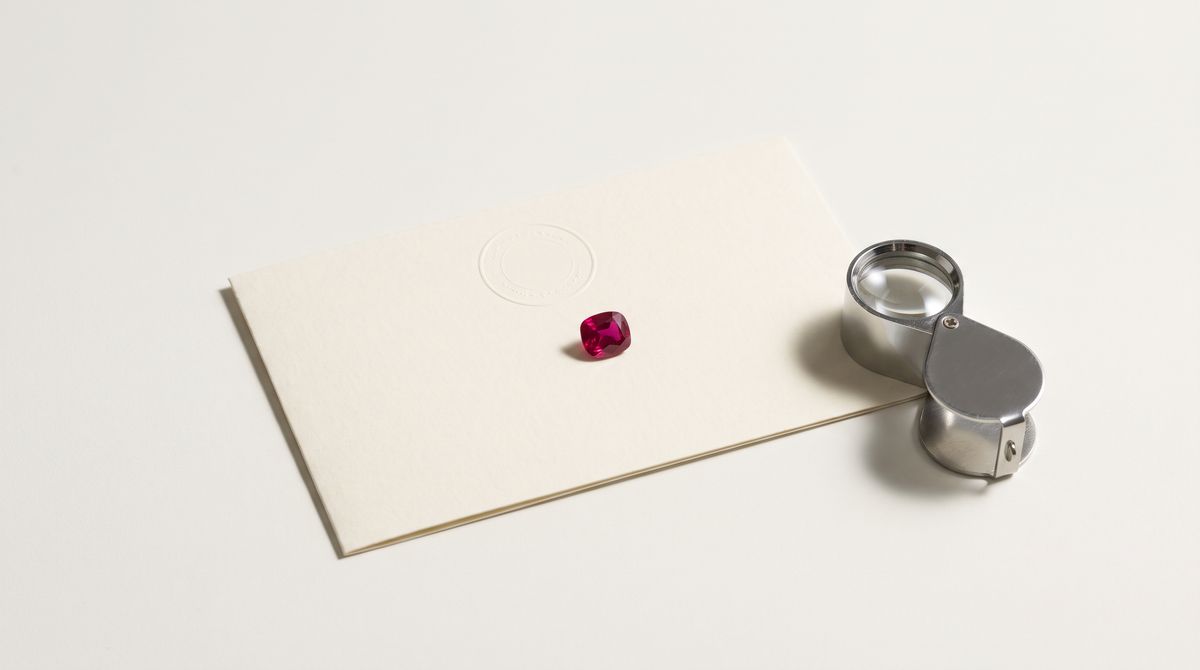
To check that a gemstone certificate is genuine, look the report up on the issuing laboratory's own website, using the report number and, for some labs, the weight, a PIN or a verification code. Then compare what the lab's database shows with the stone and the paper in front of you. A successful lookup proves only that the report exists; matching weight, measurements and photographs is what links it to the stone you are buying.
Why does verifying a lab report matter?
At online gemstone auctions buyers rarely see the stone before bidding, so the report carries the weight. In 2005 JCK reported two counterfeit GIA reports found in Antwerp; one of the diamonds had been HPHT-treated and its treatment inscription removed. This article covers how to confirm that a report exists and belongs to the stone. For reading what a report says, see our guide to GIA coloured gemstone reports.
How each laboratory lets you verify a report
Below is what each laboratory states on its own website.
GIA
- Report Check on gia.edu compares your document with the record in GIA's report database.
- Report data is available for reports dated from 1 January 2000, a PDF facsimile from 1 July 2010, and an image of the item, where applicable, from 1 January 2014.
- GIA Diamond Grading Reports dated on or after 19 December 2022 can come with a Report Access Card carrying the report number and a QR code that links to the digital report.
GRS (GemResearch Swisslab)
- GRS offers an online report search on its website, which you use after accepting a licence agreement.
- GRS reports carry two holograms with the GRS logo.
- GRS supports reports in the system for up to five years and does not guarantee every report is included; if one cannot be found, email the lab.
Gübelin Gem Lab
- For documents issued after 2018, you enter the document number and the verification code printed on the back.
- For documents issued before 2019, you enter the document number, the date and the weight.
- The database holds only documents less than ten years old, and Gübelin describes the data shown as non-binding.
- Gübelin also offers a Free Integrity Test, which checks whether a stone still matches its Gübelin report and has not been altered or swapped.
SSEF
- The myssef.ch platform authenticates a laminated SSEF report and lets you download a PDF copy.
- PDFs are available for reports issued after 11 July 2016; older reports can still be verified but not downloaded.
Lotus Gemology
- You need the report number, typed exactly as printed including the hyphen, and a PIN. Both appear on the small card supplied with the report and inside the report.
- The lookup shows identification details and offers a PDF download.
- New reports can take a couple of days to appear online; reports from before February 2015 may have no PIN, so contact Lotus.
Bellerophon Gemlab
- The verification form asks for the full report reference and the weight exactly as shown; for a pair, you enter the second weight.
- Matching reports can be checked and downloaded in digital form.
- Reports issued before January 2020 are checked on a separate page.
GUILD Gem Laboratories
- You enter the certificate number from the top-right corner of the report; the check is free.
- GUILD's standard report includes a high-resolution photograph of the stone, which helps when comparing.
AGL, IGI and other laboratories
- AGL states that it has no Report Check on its website; to verify a report you phone or email the laboratory.
- IGI says QR codes on its reports allow instant online verification, alongside its Verify Your Report tool.
- For Gem Report Antwerp, or any lab whose online lookup you cannot find, contact the laboratory directly with the report number.
For any other lab, find its official website yourself, not through a link from the seller, and use its lookup or contact page.
A database match proves the paper exists. Only the stone itself can prove the paper is about it.
What does a successful lookup actually prove?
Less than many buyers assume. GRS states that finding report data online does not authenticate the report in your hands; full authentication needs the original report and the stone, re-examined by GRS. Gübelin puts it in similar terms: "The only valid document is the unaltered original document". A genuine report number can be paired with a different stone, so the lookup is only the start.
Once the record is on screen, compare it line by line with the listing and, when the stone arrives, with the stone:
- Weight to two decimal places. A stone that weighs less than its report may have been recut.
- Measurements in millimetres and the shape and cutting style.
- Colour description, treatment statement and origin opinion, word for word.
- The photograph, if the database or PDF shows one: outline, proportions and visible inclusions.
Why a report describes the stone only at the time of testing
A report is a laboratory's opinion on a stone on the day it was examined. In June 2026, Rapaport reported an SSEF alert about emeralds cleaned and re-filled after testing, then offered with older reports. SSEF reminded the trade that its reports cover the stone's condition at the time of testing only. GRS recommends re-checking stones at purchase and whenever ownership changes, noting that stones may be recut or altered and that knowledge of origin and treatment evolves.
Red flags on a gemstone certificate
- The weight, dimensions or shape in the database do not match the listing or the stone.
- The PDF looks edited: mismatched fonts, misaligned text, a report number that differs between pages, or a photo that does not match the stone.
- The laboratory cannot be found online, or its only web presence is a link supplied by the seller.
- The "certificate" was issued by the seller or an affiliated company rather than an independent laboratory.
- The report is old relative to the sale, especially for stones prone to post-test treatment such as emerald.
Our page on certification and treatments explains what reports disclose.
What to do if you are in doubt
- Ask the seller for the full report number and a clear image of the original document, front and back.
- Run the lookup yourself on the lab's official site.
- If anything does not match, contact the laboratory with the report number before paying, or before the end of any inspection period.
- For a significant purchase, consider asking the issuing lab to re-examine the stone: GRS says full authentication requires re-inspection of the stone, Gübelin offers a free integrity test against its own reports, and Lotus Gemology offers a re-identification (Re-ID) of stones it has tested before.
Our online auction buying checklist puts these steps alongside fees and returns. If a report uses colour terms such as pigeon's blood, read how each laboratory defines pigeon blood before relying on it.
At Auction Gems Europe, every stone is offered at a fixed price and listed with its laboratory, report number and treatment status, so you can verify the report before you buy. You can request a quotation or ask a question on WhatsApp from any product page.
Frequently asked questions
How do I check a GIA report number?
Use GIA's Report Check on gia.edu, which compares your report with GIA's database. From mid-2010 it also shows a PDF facsimile.
How do I verify a GRS report?
Use the online report search on the GRS website. GRS says a match does not authenticate the paper report itself.
Does a valid report number prove the stone is genuine?
No. It proves the laboratory issued a report with that number. You still need to match the weight, measurements, description and any photograph to the stone you receive.
What details do I need to verify a Lotus Gemology report?
The report number, including its hyphen, and the PIN printed on the report card and inside the report.
Can a lab report become outdated?
Yes. A report describes the stone when it was tested. SSEF warned in June 2026 that some emeralds were treated after testing, and GRS recommends re-checking stones when they change hands.